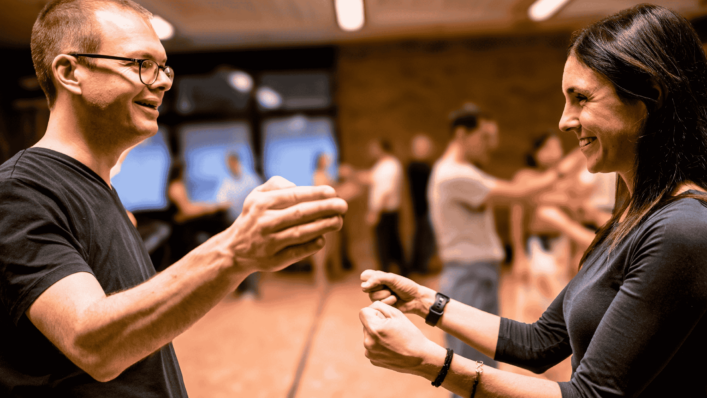
Martin’s Story: Finding Confidence Through Tango
People of Tango Flow — Student Stories
Martin has always been someone who enjoys simply being present in a room and sensing the energy of the people around him. Small talk, however, never felt natural.
“I’ve been most happy being silent within a group of people and just receiving the energy in the room,” he says. “The world of small talk didn’t feel native to me.”
Because of this, connecting with people was not always easy. While browsing websites for activities in Munich, Martin eventually came across an advertisement for a Tango Flow beginner tango course in Munich. He had previously taken Standard and Latin dance classes, including a little tango, but Argentine tango itself was still largely a mystery to him.
At first he simply wanted to try something new. But during the very first lesson he heard something that changed how he looked at the dance.
“When you said in the first lesson that tango is a language, it became really interesting.”
That idea stayed with him — and marked the beginning of a journey that would change much more than just how he dances.
Discovering the challenge
At the beginning, tango felt like stepping into a completely new world. It was exciting, but also surprisingly demanding. Like many beginners, Martin suddenly had to learn many things at once: posture, balance, connection with a partner, and how to clearly lead movements.
Physically, this was not easy for him at first. He noticed a lack of energy and body tension, especially when starting to dance in the evening classes.
“I wondered how to create the energy necessary to transmit the lead and give a good feeling to the follower.”
There were also mental blockages. Sometimes he hesitated to fully commit to movements, instinctively pulling his feet back instead of transferring his weight completely. These moments of hesitation made him realise how closely physical movement and confidence are connected.
Interestingly, the social side of tango felt easier for him than everyday conversation.
“Social connection was working better than beside the dance floor. You can always speak about what you’re just learning in the class.”
Many people who consider learning Argentine tango worry that it might be too difficult or that they might feel awkward in the beginning. Martin’s experience shows that these feelings are completely normal. Learning tango is not just about memorising steps — it is about discovering how to move, connect, and communicate through the body. For most beginners, confidence grows gradually with practice, exactly as it did for Martin.
Why he kept coming back
For many beginners, tango can feel overwhelming in the first weeks. For Martin, however, the challenge itself became part of the attraction.
He noticed something important about himself: whenever he became too passive in life, he quickly felt unhappy. Tango did the opposite. It required attention, focus, and continuous learning.
“Putting on my tango shoes every second day feels appropriate for me currently.”
Over time he also discovered that he strongly connected with the upright and grounded dancing style taught at Tango Flow.
“I really like the very upright style with pushing from the heel that you’re teaching. It occurs most powerful and flexible to me, and with a spirit of individually moving forwards.”
There was only one small conflict he jokes about: dancing late in the evening sometimes meant missing early morning sunlight.
“Original Argentinians experiencing early sunlight when returning home from dancing will put shame on me.”
The changes that followed
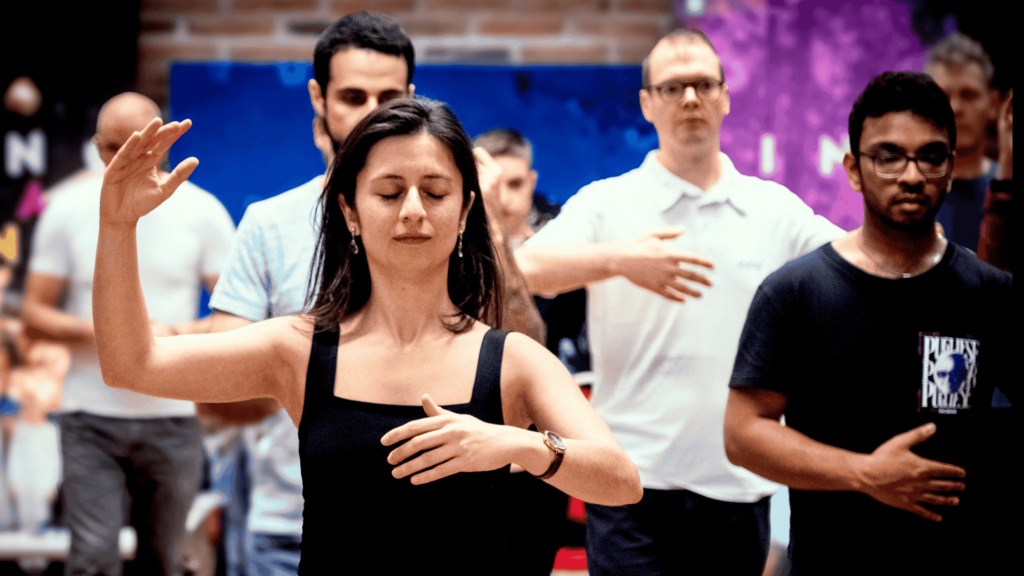
The changes Martin experienced did not happen overnight. In fact, he says that other people often notice them before he does.
Gradually, however, he became more aware of how he moves, stands, and communicates.
“I consciously notice more of what I’m sensing and feeling and thinking, how I’m moving.”
He now walks more upright, presenting his chest more confidently and placing his head proudly at the top of his body. Even in everyday life he feels encouraged to speak more clearly and take space with more presence.
Something else also began to happen: people started enjoying dancing with him — and asking him to dance again.
“At some point, followers started to really like dancing with me and continue to ask me to join for lessons or milongas.”
For Martin, tango eventually became something more than just a dance.
“Tango developed to be the prototype of positively energetic activity — awareness of body and mind, focus and determination, courage and deep connection.”
A milestone moment
One moment in particular marked an important step in Martin’s tango journey. He was invited to give a short presentation at Brezel Practica, a community practice event where dancers share ideas and learning experiences with each other.
The invitation came as a surprise.
“I didn’t expect it at that point, and was feeling immense trust and honour.”
Standing in front of dancers who often had much more experience felt both exciting and intimidating. Yet the experience confirmed something important to him: it was possible to step forward and share his own perspective on tango.
“It was a useful hint to take another step and present my personal approach to dancing.”
For Martin, the moment symbolised something deeper — trusting his own development and continuing to grow.
Looking back
If Martin could speak to the version of himself who walked into his first tango class, he would say something simple:
“You’re able to learn that!”
Even when things feel difficult, curiosity and good teachers will help you find the tools you need. One practical tip he would give himself is to film his dancing from time to time, even if it feels uncomfortable.
“You’ll much faster have a link between inward and outward perception.”
And what would he say to someone who feels shy or insecure but is thinking about trying tango?
“Make your life special!”
For Martin, tango teaches awareness of perception, feelings, thoughts, and movement while building trust and connection with others.
“Find your own speed, but don’t give up early because the challenge is what you’re searching for.”
Further inspiration from Martin
Along his tango journey, Martin also explored books, ideas, and practices that helped him deepen awareness and resilience:
- Becoming Aware – Daniel J. Siegel
- Beyond Anxiety – Martha Beck
- Dead Poets Society (novelisation by Nancy Kleinbaum)
- Wim Hof Method
- A short video about embracing challenge that resonated with him early in his tango journey:
https://www.youtube.com/watch?v=ha1ZbJIW1f8
These influences shaped how Martin approached tango — not just as a dance, but as a way to develop presence, courage, and meaningful connection.

Editorial note
This story is based on answers Martin shared in a questionnaire about his tango journey. The text was edited for clarity and length and published with his permission.
Curious about learning Argentine tango in Munich?
You can find information about our beginner courses here.