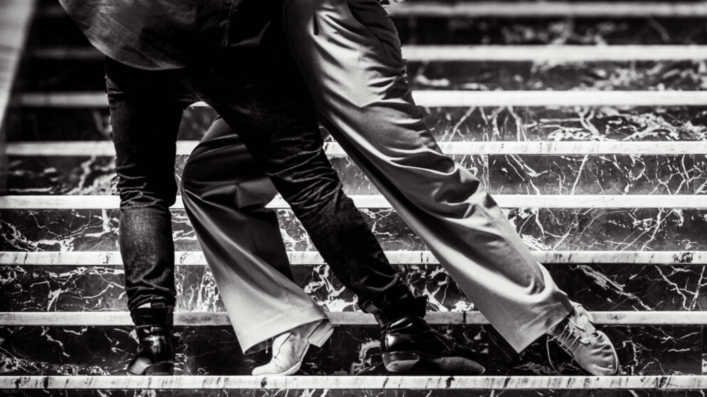
What Balance Really Means in Tango
At Tango Flow, we often say something that surprises people at first:
Balance in tango is not something you have — it’s something you are constantly doing.
Many dancers imagine balance as a static state, like standing on one leg and not falling. But in tango, we are almost never static. We are walking, pivoting, turning, extending, and circling. Balance happens inside movement, not instead of it.
And even more importantly: being slightly off-balance is not a mistake.
It is part of dancing.
What really matters is not avoiding imbalance, but knowing how to find balance again whenever you need it — especially before a pause, a pivot, or a more complex movement.
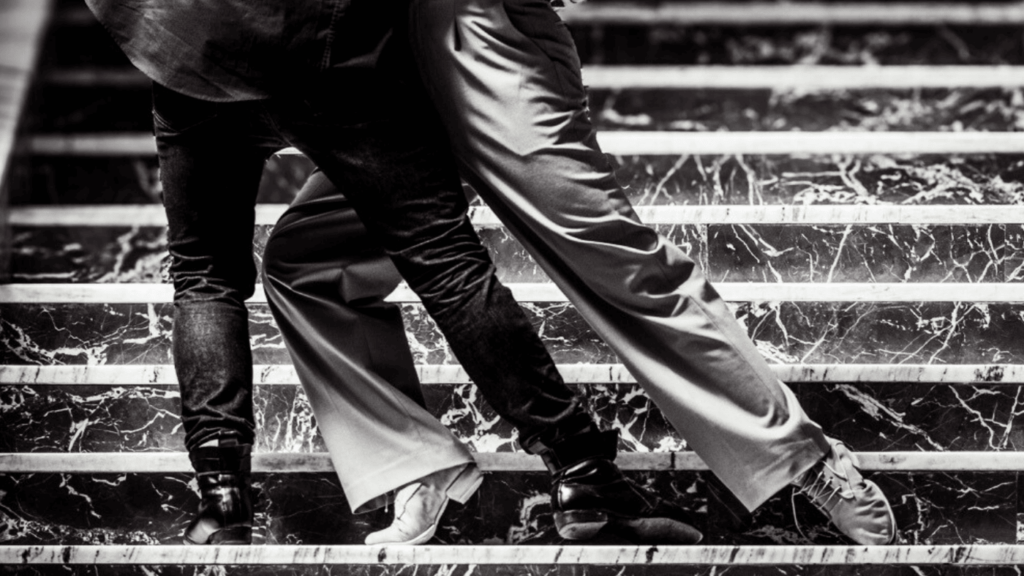
Balance is not a position — it’s a relationship
In a simple way, balance is just forces balancing each other.
If you extend one leg forward, your center of gravity will naturally shift a little backward.
If your leg moves to the side, your torso subtly responds in the opposite direction.
If your foot draws a circular shape on the floor (a lápiz), your center quietly travels the other way to keep everything connected.
You don’t need to calculate this.
Your body already knows how — if your feet are awake and your center is free to move.
How we teach balance at Tango Flow
That’s why at Tango Flow we don’t teach balance as “hold yourself still.”
We teach it as listening to where your weight wants to go while you move.
Strong, sensitive feet give your body the information it needs to make these tiny adjustments. That’s why foot strength and awareness are not just physical exercises — they are the foundation of how we move, connect, and feel safe while dancing.
In tango, balance is not a pose.
It is a conversation between your feet, your center, and the floor.